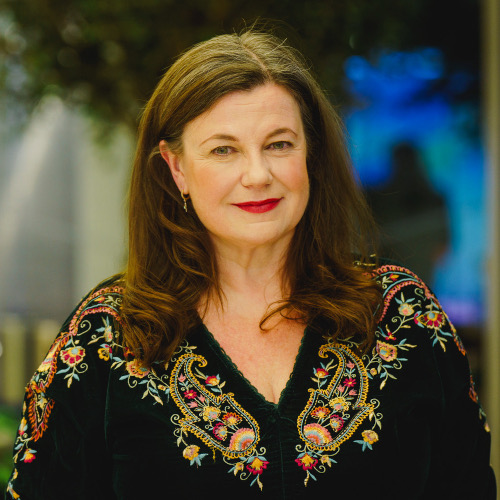
The Business Fame Magazine is pleased to present an exclusive interview with Amanda Brock, CEO of OpenUK, a pioneering leader who has built one of the most influential organizations in the global open-source ecosystem and the first to combine industry advocacy with policy work in open source. She is also the Executive Producer of State of Open Con, having founded and led the 2023–2025 editions with over 800 attendees and 200 speakers, and preparing to take the event on the road in 2026. With 25 years of legal experience—including five years as the first General Counsel of Canonical—Amanda has played a vital role in shaping both open-source legal frameworks and early internet law. A respected contributor to the tech press, she also edited the acclaimed book Open Source: Law, Policy and Practice (2022), which was translated into Mandarin in 2025.
Interview Questions:
- For our readers, could you briefly introduce yourself and your role at OpenUK?
I’m CEO at OpenUK and also at our new early stage organisation OpenHQ. I also sit on a number of Boards and Advisory group for a variety of commercial organisations and start ups. I write for the tech press and edited the key open source legal text book, “Open Source Law, Policy and Practice” which has 26 expert authors and was recently translated into Mandarin. It’s a great privilege to also be able to travel the world speaking at events. Last year that took me from India, to Thailand,China, Japan, Africa and across Europe.
The organisation for the business of open technology
OpenUK is a unique industry body focused on the business of open technology which is almost 6 years old. Importantly it also delivers policy work. A gap emerged in the software and AI industry that we fill for the UK with this policy work. Whilst open source software has had an incredible trajectory in the last 10 years to become the norm in software today, it isn’t created or managed in the same way as traditional closed, proprietary software. That means that there is a lack of representative voice in policy for the open source ecosystem and that makes policy a little complicated.
Open source has a collaborative community of home-based individuals who are employed by local and international companies, but also contribute what others might consider work in our free time, contributing code, governance, and community leadership, generally without payment. For many in the open source business community, the lines between our work and personal time can be blurred. Frequently we are home workers or we work in local offices but collaborate with colleagues across the globe. This means that someone sitting in their kitchen or a home study working in the UK can be a senior technology leader, well known in the Bay Area, in the US – the epi-centre of tech.
A leading and unique organisation
At OpenUK we recognised that outside of the US and possibly China there is a huge local community working in open technology, which in the UK we often refer to as a “submarine under the digital economy.” These are the people we bring together, by focusing unlike many industry organisations on people, and then relying on the companies to follow them in to fund us through sponsorship. The UK has one of the biggest of these communities in the world and more per capita than any other country in the world.
More recently we have also sought public sector and philanthropic funding to support our work. This work splits into three pillars of: community, legal and policy and learning.
OpenUK’s policy work is critical as due to the way our ecosystem creates tech, individual companies or even code holding foundations doing the policy work doesn’t really represent the business ecosystem properly. We see this as very important. With our Research Director, Dr Jennifer Barth do a huge amount of research and reporting around open source – software and AI in particular. It’s world leading and we often see other much bigger organisations following our work.
Internationalisation
We have been asked to build sister organisations in many countries, but the economic climate has made us question the timing for that. So we set up OpenHQ this summer and our collaboration in India around the AI Impact Summit has been the starting point for our international work. You will see this in Delhi at the AI Impact Summit. I have been listed on the Impact Summit as a keynote speaker for some time and am very excited to be joining this in February. It’s a great honour to be representing open source at this, and to have a speaking opportunity. I was in Paris in February 2025 at the AI Action Summit which India co-chaired.
- What motivated you to champion open technology and open source as a foundation for digital leadership?
From lawyer to CEO
I started out in Scotland where I grew up in the hills of the lower Highlands. It was beautiful and dramatic. I was the first in my family to go to University, where I studied law. In the UK we study law as an undergraduate degree, and I went on from studying it at the University of Glasgow to an international masters program at New York University with a Rotary International Scholarship, then to study in London to Queen Mary where I studied for a masters in intellectual property and IT law. It included the first course in the UK on internet law and that really kickstarted my career. Long before I was involved in open source I was known as a dotcom lawyer. One of the first and I both worked commercially and was involved in shaping the legal infrastructure around the internet in its early stages. I also wrote a book on e-business which had two editions.
In open source I was fairly early in being involved from the legal or business side. I joined the UK’s Canonical open source company in early 2008, founded by South African entrepreneur Mark Shuttleworth. He was the first space tourist, after selling his first business.
My role at Canonical was supposed to be a three month assignment before I moved on to Amazon, but I stayed 5 years. Like the internet work, the legal work I did in open source gave me an opportunity to make the law work in areas of new technology and I love that challenge.
Open source and the people I met there were sort of intoxicating to me. Their values matched mine, believing in collaboration, sharing and a different model for tech where the underlying technology was shared.
When after 25 years as a lawyer I wanted to change career, it was a natural pivot for me to move into open source, and it’s been an incredibly liberating experience, where today I am purpose driven in my role. That’s a great feeling. It’s also allowed me to leverage my legal experience and a number of other skills like organisational and fund raising skills that I used much less as a lawyer. I very much enjoy building.
- How do open ecosystems contribute to stronger, more sustainable innovation in today’s digital economy?
I mentioned that open source has been on an incredible trajectory. When I was first involved its adoption was blocked by enterprise gatekeepers – finance, legal and procurement. It’s much easier to say no to something that you don’t understand than to assess risk. They didn’t really understand it – that it is code where you share the normally secret human readable form of software and licence it on a standard licence that allows anyone to use the code for any purpose. But what it really means is that code is recycled and reused rather than reinventing the wheel. This has allowed us to stand on the shoulders of giants reusing their code for free, and evolving it and giving back.
In the last 10 years the efficacy of open source software has seen it become over 76% of commercial software stacks and over 90% of all software depends on open source software to run. It has become the norm for Big Tech who have increasingly engaged in it. But at the same time any individual who has the skills, anywhere in the world can engage and contribute.
It’s been so popular as it is by far the best methodology for software development. I believe it has the potential when well managed to democratise technology.
The rise of AI openness
Today with the rise of AI, we see the role of open source in AI as critical. OpenUK partnered with meta on the launch of LLama and was the only open source organisation in the world to do this. We were able to do it, because we have this broad open technology focus, not just open source software. Llama is not open source, but open innovation and the breadth of our engagement allowed us to support that. It was a huge step in the right direction.
OpenUK has been reporting on AI openness since July 2023 across a number of reports. We did one live from the global leaders’ AI Action Summit in February and will undertake a further report from the Indian AI Impact Summit.
4.From a leadership perspective, what challenges do organizations face when adopting open technologies?
The challenge of open tech
Organisations struggle to understand open source in its various forms. Because there is a royalty free distribution they expect it wont cost anything but implementing it into business comes at a price. Also, it takes skills and whilst the underlying technology comes free support, maintenance etc does not. Organisations need to understand that they will have to pay a contractor or enterprise or hire someone to manage their open source.
As their use becomes more sophisticated they will also probably want to participate in the ecosystem, to develop further skills and have influence over the tech that they use. This also comes at a cost. It’s essential that users understand that they will be expected to contribute back.
- What role do boards and senior leaders play in shaping responsible, open digital strategies?
The C-Suite challenge
There’s a constant challenge of lack of management understanding in digital generally not just open source. Educating the C-Suite so that they can make informed decisions and not listen to the wrong people is really important. Only with this will they be able to exercise judgement with the discernment needed to allow the right digital future for their enterprises. In reality governments and the public sector are facing exactly the same challenge of understanding. Part of this needs to be about listening to people with experience. There is a tendency to listen to those you know instead.
- Looking ahead, what future opportunities do you see for open technology in global digital transformation?
Nvidia CEO, Jensen Hung said last year that China’s open source AI is “going to win”. Open tech – open source software, hardware, data, standards and AI – is going to be the future of our digital economies and will touch every organisation and all of our lives. It creates de facto standards through its openness and we will see the future of our digital economies depending on it.
Our governments are slowly recognising its importance and that there is a need to fund it and build skills and I believe that in a relatively short time we will start to see joined up global funding of this collaborative technology which enables the democratisation of tech from software to AI, and access for all people.