We have come to a time in healthcare when just having innovations is no longer enough. The task is now how to bring those innovations to the people who actually need them. Artificial Intelligence, digital health tools, advanced diagnostics, and also precision medicine can impact medical care deeply, but their actual benefit does not lie in how complex they are, but how much they can help people improve their lives.
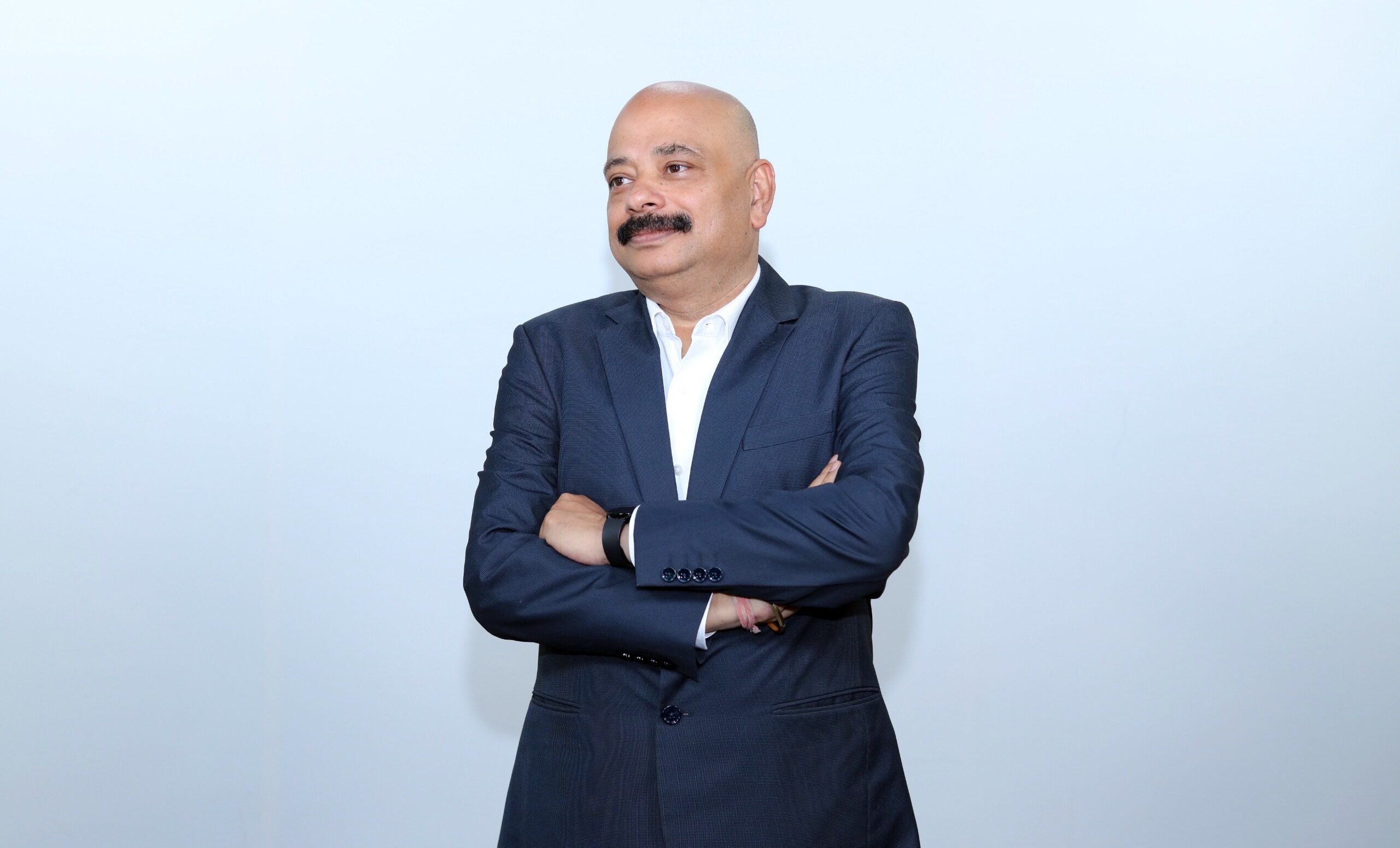
This idea has motivated Dr. Atantra Das Gupta, the chief executive officer of Transformed Arrogyam Pvt. Ltd. He has been working in the field of healthcare technology, and business transformation, and has over twenty years of experience that can be put into one statement – the innovations in healthcare should make a real difference.
The company Dr. Atantra Das Gupta is building is called Transformed Arrogyam, and it will be targeted at putting the medical equipment close to people in need. In addition to that, he has a company that makes medical solutions using AI, as well as his own platform called Khush AI & Art that allows using these medical solutions in practice.
The simple truth of Dr. Atantra’s story is that whether spearheading transformation efforts in global health companies, conducting a PhD study in patient-centered health models, or creating AI-based solutions for medical practice, it has reinforced his conviction that real progress is possible only when technology and people’s needs are one.
A Career Built on Transformation and Continuous Learning
Dr. Atantra’s career in the industry of medical technology started with his experience in renowned global companies like Samsung, Philips, and GE Healthcare for more than 26 years. Those years were not limited to commercial experience nor he merely gained insights on functioning of healthcare delivery systems or transport of medical technologies into the hospitals. They also pointed at the gaps in between the innovation efforts and possibilities for patients.
Several leadership assignments shaped his career. For example, in the capacity of Head of Samsung Healthcare Medical Equipment in Southwest Asia he was credited for the business transformation in terms of six-fold increase of operations and consistent double-digit profitability.
Furthermore, his active involvement in Philips India company through a successful turnaround of organization occurred within a short period of time, delivering significant profitability and substantial improvements of the company’s market position.
Today, his PhD studies at the Marketing Area of MDI Gurgaon involve literature reviews and statistical methods to research patient-centered health services. His growing publication output – nearly 20 articles – demonstrates his belief in participating in knowledge dissemination.
This ability to combine research and business continues to be evident in Dr. Atantra’s professional path. As the CEO of Transformed Arrogyam and co-founder of IDetect and the Khush-AI project under the ADG Catalyst initiative, he continues to set up companies that merge scientific findings with practical implementation.
Healthcare Innovation for the People Who Need It Most
Transformed Arrogyam’s mission stemmed from Dr. Atantra’s perception of a repeated pattern in his extraordinary career. Excellent medical technologies are available worldwide, but patients do not use them since the process of incorporating innovation into the ecosystem of healthcare in India seems complicated and requires official certification, quality confirmation, distribution issues, and marketing preparation. Dr. Atantra refused to consider those hurdles as insuperable and decided to establish a company to minimize those problems.
Transformed Arrogyam was created to help introduce global innovations in medical technology to Indian healthcare so that advanced medical imaging, surgical navigation systems, and point-of-care diagnostics would become more widely available. The results of work that goes on behind the scenes in successful healthcare are largely invisible and include regulatory compliance, quality control, and the development of an efficient distribution network.
However, the company’s vision does not only imply the use of technology in its work. The ideas incorporated in the patient-centered approach of Transformed Arrogyam emerged partly due to Dr. Atantra’s Ph.D. research which resulted in the development of the Patient-as-an-Organization model. Instead of viewing patients merely as individuals who receive medical care, the new model views them as active persons whose biological, social, emotional, and strategic realities are interacting on an ongoing basis during the whole process of receiving treatment. This approach is being transformed into an advanced platform that is powered by artificial intelligence and allows creating smart assessments of patients.
The application of this approach means that healthcare providers now have to pay attention not only to diagnosis but also to affordability, accessibility, provision of clinical support, and patient outcomes. Such an approach helps Transformed Arrogyam provide its customers with innovative solutions because the innovation process is closely connected with the experience of the patients.
Growth that Aligns with People and Purpose
Dr. Atantra is a reputed leader who knows how to lead organizations through transformations in healthcare and technology. He believes that the success of companies depends on the success of their employees. What is required is to make sure that while you have leaders at the top, you also empower other employees in your organization, so they can reach their full potential. His philosophy is knowledge-oriented to make sure that he gets to the most reliable conclusion. Before drawing the conclusions, Dr. Atantra makes sure that he studies data, understands the assumptions and field insights, and tests his ideas. Thanks to the years of research in academia, he knows that the decision-making process should be based on knowledge, not instincts.
A different kind of challenge emerged during the development of AIM HyperFusion, an advanced four-layer monolithic 3D AI accelerator architecture. Although the innovation demonstrated genuine technical originality, a thorough manufacturability assessment revealed that large-scale monolithic integration was not yet commercially practical.
Understanding when a specific strategy has hit a dead end does not indicate failure; rather, it indicates a chance to shift gears without losing focus on the larger goal. His ability to keep the overall vision in mind while also being flexible in execution has become one of the traits that define his leadership style.
Taking a retrospective approach to his work history, Dr. Atantra highlights sustainable growth not as the result of isolated success moments but as a result of the process of disciplined execution, setting proper priorities, continuous learning, and commitment to delivering value for customers, hospitals, and, eventually, patients.
Turning Challenges into Catalysts for Growth
Each journey taken by an entrepreneur contains milestones when their beliefs, judgement and readiness to change the established ways are tested. For Dr. Atantra, some of the most defining challenges have reinforced a belief that successful transformation begins with confronting reality rather than avoiding it.
One of the clear cases happened in 2013 when the author was running the ultrasound business of Philips India. Although it had a low profitability and an average presence in the market, he believed that this problem needed to be approached as a serious issue rather than introducing small improvement over time.
The company’s team changed the commercial model, increased the efficiency of operations, created the execution model and started working on determining areas where the consumers are experiencing a value decrease. As a result, the performance of the company improved considerably. Over a period of only 28 months the company quadrupled its profits and increased market share significantly. Such a significant achievement was even awarded with the Philips CEO Award and was praised as great collective achievement.
A different kind of challenge emerged during the development of AIM HyperFusion, an advanced four-layer monolithic 3D AI accelerator architecture. Although the innovation demonstrated genuine technical originality, a thorough manufacturability assessment revealed that large-scale monolithic integration was not yet commercially practical.
Rather than overlooking that finding to preserve momentum, Dr. Atantra chose to redesign the strategy. The architecture evolved toward a chiplet-and-interposer model that retained the core innovation while offering a more realistic path toward manufacturing and commercialization.
Both experiences strengthened a lesson that continues to guide his leadership. Long-term success comes from allowing evidence to shape decisions, even when it requires revisiting assumptions or changing direction.
Where Research, Leadership, and Entrepreneurship Meet
Dr. Atantra has various responsibilities as a professional in the industry; however, he considers them all as interconnected parts of the same purpose rather than different jobs. His academic studies lead to the theory upon which the concepts are based. For instance, the Patient-as-an-Organization concept is validated before it becomes practical in the field of healthcare.
He has managerial duties within Transformed Arrogyam and consultation work, which allows him to stay in touch with the realities of the healthcare industry. Communicating with representatives of healthcare organizations and top management helps him understand how hospitals, healthcare providers, and businesspeople deal with technologies, investments, and changes. Entrepreneurship is a field where those concepts are tested. Be it AI, healthcare technology applications, or deep-tech innovations, any idea is subjected to the reality of regulations, production, investment, and market usage before being implemented.
As a whole, these experiences create a cycle of continuous learning Academic research makes it possible to challenge commercial reasoning, while practical application makes sure that theoretical ideas tend to be applicable.
Ideas That Can Stand the Test of Reality
While seeing his journey thus far, Dr. Atantra reminds young entrepreneurs, as well as those preparing to become leaders, that while ambition is good, it must always be accompanied by disciplined execution. He insists that truly innovative ideas achieve their maximum value only if put through rigorous testing, validation, and refinement.
Success in all endeavours, be it leading complex business transformations, creating organizations in the healthcare sector, developing AI architecture, or working on developing digital health solutions, is always dependent on thorough testing of goals, observations, and willingness to rework the original plan.
Dr. Atantra also urges visionaries of today not to become confined to one professional identity. He is convinced that the most valuable ideas arise exactly out of the intersection of various fields. Combining research, business strategy, engineering, medicine, and entrepreneurship often creates opportunities that would be impossible to come by when remaining solely in the limits of one profession. Underlying his approach is the principle that has been a guiding light throughout his leadership and entrepreneurial journey. He adds that one should first invest in people and only then hope for extraordinary results.
Preparing for the Next Era of AI-Driven Healthcare
The healthcare sector is entering a new era where AI becomes much more than a partner to manual tasks, but rather part of a whole process of offering healthcare to patients. Dr. Atantra believes several developments will shape the industry’s future in the years ahead.
Among the most important changes is the transformation of AI from simple diagnostic technology into a complex system capable of analysing data about patients with the passing of time. For example, Digital Twin technology paired with reinforcement-related symptoms helps in creating adaptive treatment strategies that imply constant flexibility, in contrast to rigid forecasts. He also believes that Digital Twin technology will change the way the question of patient identity is perceived. With the emerging concept of digital twins come different doubts associated with trust, security, and data management.
However, one more important movement is taking place under the surface of the innovations in the AI field. AI development is increasingly dependent on specialized hardware that allows for more effective use of AI in various spheres of life, especially in healthcare, where resources are somehow limited. Purpose-built AI accelerators and edge computing technologies will become critical components in expanding intelligent healthcare solutions beyond large hospitals into broader clinical settings.
According to Dr. Atantra, organizations that view artificial intelligence only as a software capability risk overlooking an important source of future competitive advantage. Success will increasingly depend on the ability to integrate intelligent software with equally advanced computing infrastructure.