Artificial intelligence is rapidly evolving beyond systems designed to process information toward technologies capable of perceiving, learning, adapting, and making decisions in increasingly dynamic environments. As industries explore autonomous systems, edge computing, and next-generation cognitive technologies, the ability to create AI that can continuously learn and respond to changing conditions is becoming increasingly important.
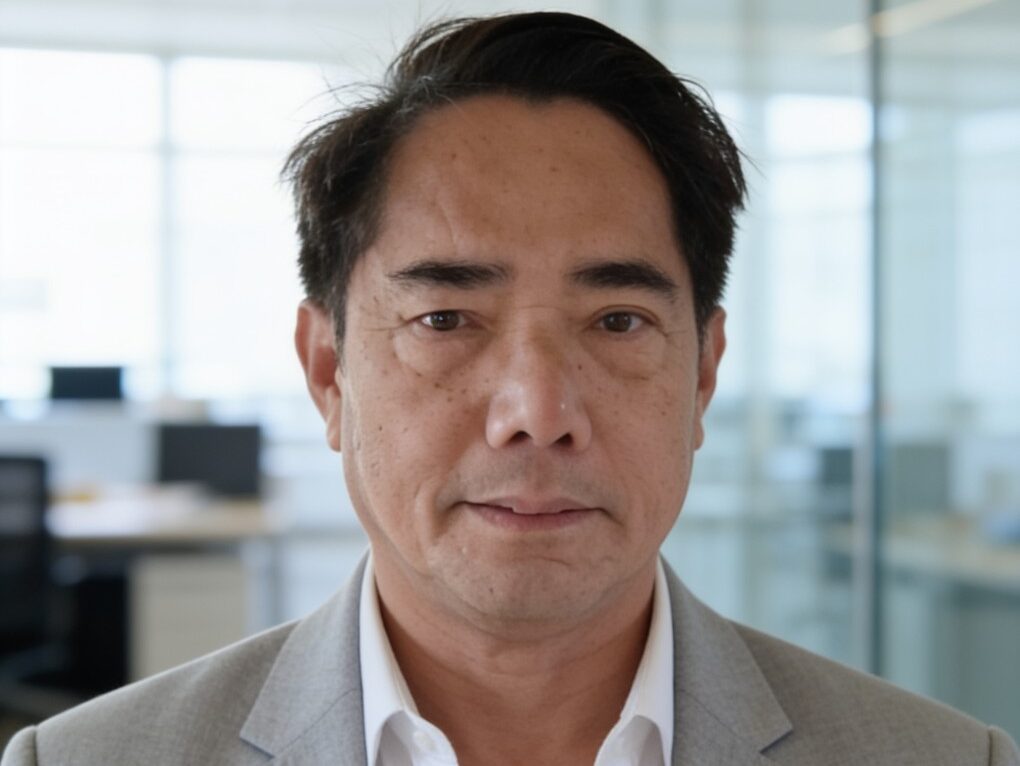
At the forefront of this evolution is Dr. Tuan A. Duong, Founder and CEO of Adaptive Computation LLC. With more than 30 years of experience spanning artificial intelligence, cognitive computing, neuromorphic engineering, and edge AI, Dr. Duong has dedicated his career to bridging neural science and engineering. His work focuses on developing biologically inspired intelligence for defense, aerospace, and commercial applications, with a particular emphasis on adaptive computing, self-intelligence, and low-SWaP edge AI systems.
From NASA Research to a Vision for Adaptive Intelligence
Dr. Duong’s professional journey was shaped by more than two decades of research at NASA’s Jet Propulsion Laboratory (JPL), where he worked in areas including neural networks, neuromorphic hardware, sensor fusion, machine vision, electronic noses, autonomous systems, and ultra-low-power VLSI systems. His research contributed to technologies supporting planetary exploration, intelligent sensing, and advanced computing architectures.
During his career at JPL, he contributed to 30 NASA New Technology Reports, peer-reviewed publications, and patented innovations covering areas such as hardware neural networks, adaptive learning algorithms, cognitive computing, and AI-enabled sensing.
Among the milestones that shaped his vision was the development of a neural network system designed to adapt to radiation effects on electronic systems. This system became the first neural network system to fly into space for a radiation-tolerance experiment during the 1994 STRV-B mission. He also served as the technical leader for the 3-D Analog Neural Network (3-DANN) processor, developed the Cascade Error Projection (CEP) learning algorithm, and worked on adaptive feedback systems designed to respond to changes in the shape and color of objects and environments for Mars landing-site identification. He also initiated the Extended Visual Pathway (EViP), which he later fully developed at Adaptive Computation.
These experiences established the foundation for the work and vision he would later pursue through Adaptive Computation.
Building Adaptive Computation Around Bio-Inspired Intelligence
After 26 years of research at JPL/NASA in neural network software and hardware, Dr. Duong founded Adaptive Computation with a clear objective: to develop intelligent systems inspired by biological vision, neural science, and the mechanisms through which natural intelligence processes information.
The company’s work brings together three interconnected areas: software, hardware, and compiler technologies.
On the software side, Adaptive Computation focuses on bio-inspired visual-system modelling and algorithms, neural science, and real-time adaptive feedback. Its approach incorporates unsupervised learning based on the Extended Visual Pathway (EViP), an emulator of saccadic eye movements and the visual pathway, alongside dynamic supervised learning designed to continuously absorb incoming data, update previously established labels based on new information, and create new labels for information that the system has not previously encountered.
On the hardware side, the company is developing massively parallel building blocks based on in-memory processing architectures implemented in VLSI hardware. These systems are designed to enable fully parallel learning and faster adaptation to dynamic environments.
A compiler layer is also being developed to exploit the capabilities of the company’s software and hardware architectures across different applications. Together, these building blocks are intended to serve as foundations for in-situ, autonomous, and self-intelligent systems operating at the edge.
Translating Neural Science into Next-Generation AI
A central theme throughout Dr. Duong’s career has been the belief that neural science and biological systems can provide valuable guidance for engineering more capable forms of artificial intelligence.
Today, he leads the development of adaptive AI technologies for edge computing, autonomous systems, autonomous sensing, and defense applications. The work focuses on bio-inspired cognitive architectures that enable intelligent perception, learning, and decision-making in dynamic environments.
Rather than relying exclusively on static systems operating within predefined parameters, Dr. Duong’s approach emphasizes technologies capable of responding to new information and changing conditions. His broader objective is to bridge neural science and engineering to create intelligent systems that can learn, adapt, and operate efficiently in real-world environments.
Creating the Foundations for Self-Intelligent Systems
One of the achievements Dr. Duong considers particularly meaningful is his work toward autonomous intelligence based on a feedback loop between short-term and long-term memory.
His approach combines Extended Visual Pathway-based unsupervised learning, which he views as a form of short-term memory, with Dynamic Supervised Learning as long-term memory. The feedback between these two components is intended to establish a building block for self-intelligence.
The EViP system emerged from Dr. Duong’s observation of the configuration of biological visual pathways. Drawing on his background in mathematics and computer science, along with algorithms he developed—including Cascade Error Projection and Spatial Independence Component Analysis—he translated these observations into an approach designed to emulate elements of biological visual processing.
EViP demonstrated strong performance in face recognition with 10,000 distractors. When combined with a feedback mechanism for detecting and tracking moving objects, the technology contributed to the development of the Online and Adaptive Image-based Search Engine in the Loop (OAISEE), which received a DARPA ERIS Awardable in 2025.
In parallel, Dr. Duong’s hardware research has focused on developing a modified hybrid in-memory processing architecture designed to improve tolerance to processing variations while maintaining resolution accuracy and enabling high-speed, low-power operation. This work, titled “Real-time Adaptive Tracking Systems for Irregular Target Moving Trajectory in SWaP-C Approach,” resulted in a DARPA ERIS Awardable in 2026.
The company is also developing a massively parallel learning mechanism intended to reduce learning time by at least two orders of magnitude compared with conventional approaches, alongside compiler development designed to exploit parallel computation across different applications.
Turning Unexpected Results into Scientific Insight
Innovation rarely follows a perfectly predictable path. For Dr. Duong, some of the most valuable insights have emerged through testing, questioning, and validating unexpected results.
Each component of his research—including software, hardware, short and long term memory systems inspired by neural science, and biological building blocks—must first be developed and validated in the laboratory before being tested with real-world data. Unexpected performance, whether positive or negative, becomes an opportunity to investigate and understand the underlying reasons.
One example involved EViP’s performance in face recognition under different levels of distraction. The system performed better than the average human under certain conditions involving a high number of distractors, while the results changed when the selection criteria became more flexible. Rather than dismissing the unexpected outcome, Dr. Duong and his team questioned whether there was an error in their approach and investigated the results further.
Their analysis led them to consider differences between human visual processing and computational systems, including the effects of fatigue and the high-precision computation used by EViP. The experience reinforced an important principle in his research: unexpected results can become valuable sources of scientific insight.
For Dr. Duong, biology and neural science therefore serve not only as sources of inspiration but also as practical guides for overcoming challenges and refining intelligent systems.
Reimagining the Role of AI in Everyday Life
Dr. Duong’s vision extends beyond technical performance. He sees advanced AI and cognitive computing as technologies that could ultimately reshape how people work and live.
If sufficiently capable AI and cognitive computing systems can be successfully developed, implemented, and validated, he believes that affordable intelligent technologies could make industries such as agriculture, manufacturing, and distribution more productive and effective. Greater automation could potentially reduce working hours, ease pressure and stress, and give people more time with their families and with nature, while contributing to improvements in happiness and healthcare.
This perspective highlights an important dimension of his work: the pursuit of intelligent technology is not solely about creating more advanced machines. It is also about exploring how intelligent systems can contribute to more productive, sustainable, and human-centered environments.
Better Models, Better Data, and the Power of Adaptation
For Dr. Duong, the development of successful AI systems depends heavily on the quality of models and data, as well as the ability to incorporate new information through dynamic feedback.
During his years at JPL, he posed a fundamental question: if everyone—including researchers, peers, and competitors—uses AI, who will ultimately have the advantage?
He answered that those with better models and data, combined with dynamic feedback systems, would be more advanced because they could incorporate updated information and build more resilient capabilities. This thinking continues to influence the direction of Adaptive Computation.
Rather than relying exclusively on static approaches, his research focuses on developing systems that can continue learning and adapting as information and environments change.
Toward Affordable, Domain-Specific Self-Intelligence
Looking ahead, Dr. Duong views self-intelligence as one of the ultimate milestones in artificial intelligence. However, his vision is deliberately focused on specialized applications.
Rather than pursuing general self-intelligence without considering its cost or potential consequences, he envisions developing self-intelligence first within specific domains where the technology can be practical and affordable. At the same time, he recognizes that the pursuit of general self-intelligence could introduce risks to humanity.
This balance between ambition and responsibility reflects the broader philosophy behind his work: advancing the boundaries of AI while remaining conscious of the practical and societal implications of increasingly autonomous systems.
Passion, Planning, and Ambition: A Message to the Next Generation
For aspiring entrepreneurs, researchers, and innovators, Dr. Duong’s message is concise yet powerful: passion provides endless energy, well-planned projects help sustain resources over time, and ambition pushes individuals toward greater achievements.
After more than three decades at the intersection of artificial intelligence, neural science, aerospace, and advanced computing, his journey reflects the value of pursuing complex questions with persistence, curiosity, and a willingness to challenge conventional approaches.
From NASA’s Jet Propulsion Laboratory to the development of adaptive computing architectures, Dr. Tuan A. Duong continues to explore one of the most ambitious questions in modern technology: how can machines move beyond static computation and develop the ability to learn, adapt, and respond intelligently to changing environments?
Through Adaptive Computation, his work is helping advance this pursuit at the intersection of biology, engineering, and artificial intelligence—laying the groundwork for a new generation of adaptive, autonomous, and increasingly intelligent systems.