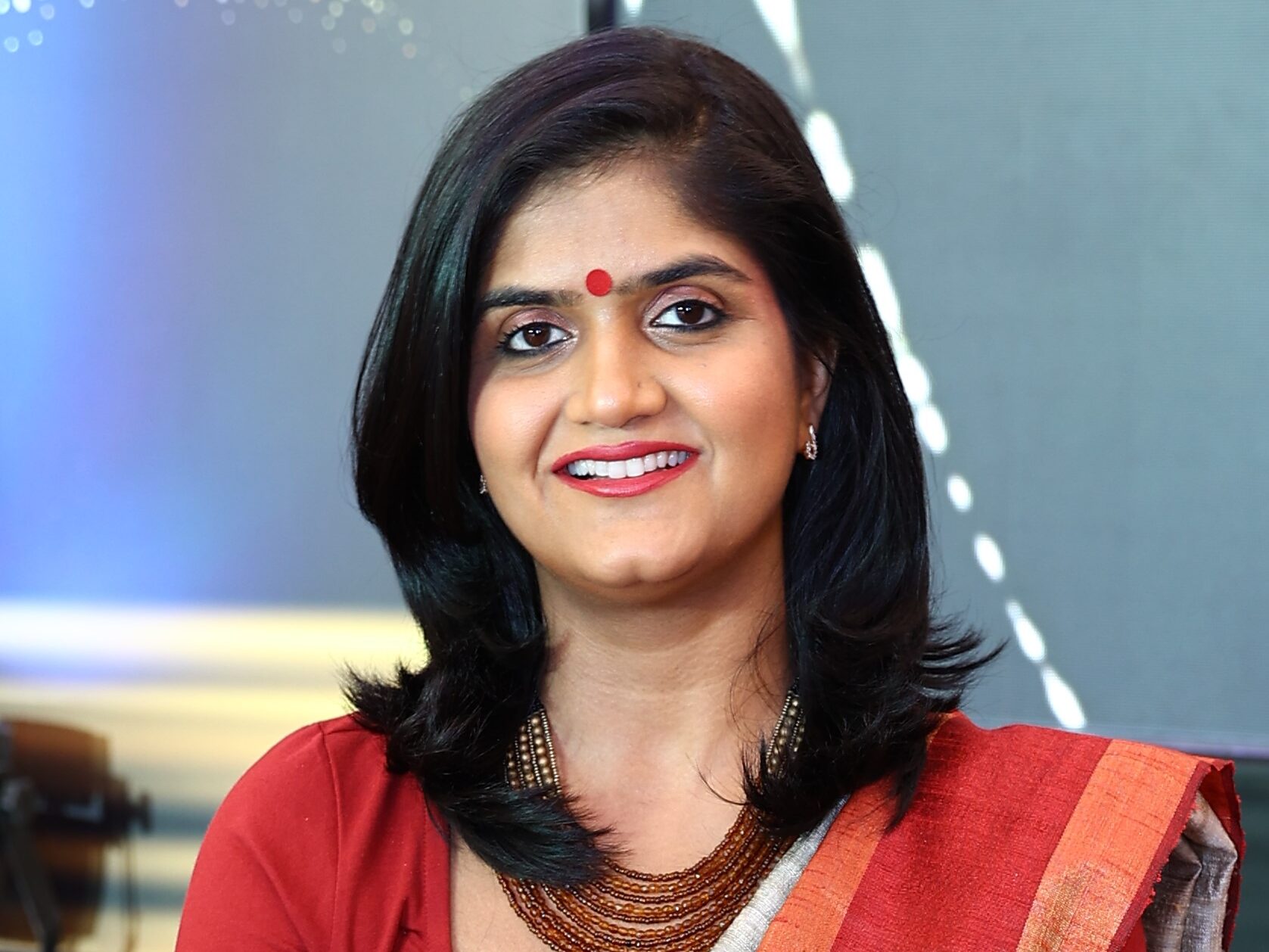
In this exclusive interview, The Business Fame Magazine speaks with Amrita Pandey, Lead – Learning Delivery for APAC, Europe & Africa Eurasia at Colgate Global Business Services, whose 12-year journey in human resources, talent acquisition, employer branding, and organizational development reflects a deep commitment to building inclusive cultures and empowering people to realize their fullest potential.
Q. What is your leadership philosophy, and how do you ensure that it is reflected throughout your organization?
My professional journey in HR is built around a simple leadership philosophy: Adding value, making real connections, and never stopping learning. I don’t think all the learning comes from the people above you—we’re surrounded by an environment where every experience can teach us something if we pay attention. I even learn from my 3-year-old every day! She teaches me patience and how to roll with the punches. It really hammers home that change is the only constant, and you simply can’t plan for everything. Just when you think you’ve got it all nailed down, life throws a curveball that messes up your entire plan. Doesn’t that happen at work, too? I mean, who thought Python or Power BI would be old news in just a couple of years? Did we ever imagine AI would shake up everything around us? Honestly, I was so tempted to use AI to answer these questions, but then integrity won out, so here we are!
Also, when I talk about constant learning, I make sure to put in the effort to keep up with industry trends and how the market is changing with the current global political situation.
When it comes to making meaningful connections, we live in a world of personal branding where everyone is just trying to network their way into a job lead. In all this noise, where does the real “meaning” of a connection go? Until we genuinely show interest in people, that true connection won’t follow.
Q. How do you balance the need to innovate and take risks with the need to maintain stability and profitability?
Balancing innovation and stability is crucial for any company’s success. Everyone aims to achieve a high performing system to achieve this. Couple of principals that I have followed in the past
- Fund the Future with Smart Risks: Be it be it processes, systems. The first to target should always be the low hanging fruits.
- Prioritize Premium Innovation: One trick off the bag that I have see most of the giant stable MNCs played out by the market dominators is that they invest in science-led, premium ideas that command higher prices and profit margins. These innovations justify the risks, and also add to your top line.
- Reinvest Savings: Use productivity improvements and programs like Revenue Growth Management to generate savings. Reinvest these savings directly into future innovations.
- Maintain Agility: Stability means being adaptable. Our processes should be flexible enough to adjust quickly to market changes. Amidst the western uncertainty and the biggest economy of the world in a political impasse, things are more uncertain than ever.
How can I be done without the mention of the omnipresent AI! The trick is to:
- Focus on Augmentation, Not Replacement: When implementing new technologies like AI, prioritize “AI Inclusion” over “Human Reduction.” Transparently communicate our strategy and avoid actions that erode trust.
6 Invest in People: Ensure employees evolve with technology. Our strategy, technology, and culture must work in harmony, with significant investment in training to augment human intelligence.
The goal is to create a continuous cycle: launch high-margin products and capabilities (Risk), gain market power and profits (Reward), achieve operational savings (Discipline), reinvest savings into new ventures (Reinvestment), and manage change with empathy and foresight (Trust). This approach ensures innovation strengthens our foundation rather than undermining it.
Q. How do you identify and develop the talent within your organization, and what role do you see mentorship playing in this process?
The Talent Game: Finding Your MVPs and Turning Them into All-Stars
As someone driving talent strategy, you’re basically a high-stakes scout and a professional coach rolled into one. Your job isn’t just to fill seats; it’s to spot the raw potential and give people the tools to become indispensable.
Here is a personalized, casual take on how to nail this process, especially as it connects to your work in Organizational Design and Learning & Development:
- How We Spot the Talent (The “Scouting Report”)
Forget the old-school annual review where people are just rated 1-5. Identifying real talent is about seeing potential, not just past performance.
- The “9-Box” with a Twist (Performance & Potential): We still need a formal process, but let’s make it about trajectory. The classic 9-Box grid is powerful, but we need to ask better questions:
- Performance: Are they consistently hitting targets? (The “Do they get the job done?” box).
- Potential: Are they curious? Do they handle ambiguity well? Do they learn from mistakes quickly? (The “Can they handle the job after this one?” box). This is where you find your Evolution Engines—the people who thrive in constant change.
- The “Shadow” Skills (Culture & Impact): Look for the skills that don’t make it into their job description but make everyone else better:
- The Collaborator: Who can bring two feuding teams together? Who consistently shares knowledge?
- The Advocate: Who speaks up for inclusion and equity, even when it’s tough? (This aligns perfectly with your DE&I Advocate philosophy.)
- The Problem Solver: Who sees a broken process and quietly fixes it, even if it’s not their lane? These are the natural leaders.
- Talent as a Business Metric: Your work in Organizational Design means you need to look at talent through a strategic lens. Where are the capability gaps for the next three years? The people who can fill those gaps are your talent, regardless of their current title.
- How We Develop the Talent (The “All-Star Training Camp”)
Once you’ve found them, you can’t let them sit still. Development needs to be constant, relevant, and hands-on.
● The 70-20-10 Rule (Keep It Real-World):
- 70% On-the-Job Experience (The Deep Dive): Give them a massive project outside their comfort zone (a stretch assignment). Make them lead the implementation of a new HR policy or tackle a high-visibility, cross-functional problem. This is where they build muscle.
- 20% Feedback & Coaching (The Coach’s Huddle): This is where you leverage your work on the Performance Leadership Program. We need to shift managers from giving orders to using neuroscience-based coaching. A coach doesn’t just tell you what to do; they ask powerful questions to help you find the This builds self-awareness and ownership.
- 10% Formal Learning (The Classroom Refuel): This is your Learning Delivery sweet spot. Use formal training (like “Becoming a People Leader”) strategically to teach core frameworks, like conceptual thinking or change management, which they immediately apply to their 70% assignment.
- Internal Mobility: The best way to develop someone is to literally move Lateral moves to different functions or regions give them a complete, 360-degree view of the business. You need to make it cool to move sideways, not just up.
- The Role of Mentorship (The “Trusted Advisor”)
Mentorship is the absolute non-negotiable secret weapon in this whole process. It’s the difference between talent existing and talent flourishing.
- The Safe Space for Risk-Taking: When you’re asking someone to innovate and take a risk (70% assignment), they need a lifeline. A mentor is that person. They offer a safe, confidential space to vent fears, test crazy ideas, and get wisdom without fearing judgment from their actual boss.
- Bridging the Strategy/Execution Gap: Mentors who have been in senior roles can translate the big-picture corporate strategy (the Evolution Engine) into day-to-day decisions. They help the mentee understand why a particular risk is worth taking and how to navigate the organizational politics around it.
- Championing Inclusion (Sponsorship): Mentorship is great, but sponsorship is better. A sponsor is a senior leader who isn’t just giving advice; they are actively using their influence to advocate for the mentee, ensuring they get those critical high-visibility assignments and opportunities. Given your focus on DE&I, this is a crucial step to ensure underrepresented talent actually gets the exposure and promotions they deserve.
Ultimately, your role is to create a system where talent is consistently visible, constantly challenged, and always supported. When you do that, stability and innovation stop being a balancing act and start being the same thing.
Q. What are some of the most impactful projects or initiatives you’ve led or been a part of in your role, particularly those related to learning, employer branding, or HR strategy?
Beginning my HR career as a Deputy Manager at Hero MotoCorp, I was immediately immersed inHR Business Partnering and Employer Branding, which laid the groundwork for my expertise in the relevant field. During this time, I honed my skills in key skills such as stakeholder management, analytical thinking, project management, contributing to projects that included getting SuccessFactors implemented for Employer Branding at Hero MotoCorp. One of my key achievements during the time in the space of Employer Branding was getting Hero MotoCorp the limelight in the show MTV
LinkedIn Get A Job. It was the pilot which I led for the organization. Early on in my career, I was exposed to multiple complexities of managing the C-Suite who were participating in the show, managing expectations of external stakeholders – MTV and LinkedIn, who had very different and varied expectations. My role involved project managing the show -Hero episodes, which allowed me to develop a thorough understanding of project management and since the show was getting aired on National Television on MTV, I was very sensitive to how the Brand Imagery will be portrayed. The biggest challenge I encountered was conflicting brand values- Hero had a conventional yet progressive mindset, and wanted to go with a certain way in which the brand gets portrayed -closer to home, while MTV had a very unconventional way and wanted to go ahead with what the youth would like and how to maximize the hits and traffic on the show. There were conflicting views on even the usage of words – Hero wanted their say and wanted to censor a lot of the part that in the first round the MTV VJs Cyrus Broacha and Nikhil
Chinappa had used. MTV wanted that to stay to maintain the cool quotient.
Balancing the conflicting priorities, and how to maximize the common denominator was my biggest learning in the process. Also, I got to be on National TV! Impact Hero’s episode alone got 7 lac social media hits and Hero was able to shed its imagery of a conventional automotive employer. Key impact that I was able to drive in the project was that
Hero still is a part of the show and is still continuing in 2024. Happy to have started the legacy.
Episode Links:
Facebook – https://www.facebook.com/mtvindia/videos/10155217159075102/? pnref=story
Voot
https://www.voot.com/shows/linkedin-get-a-job-s03/3/488553/heromotocorp-is -hiring-/512565
Q. What long-term changes would you like to see in the field of diversity and inclusion over the next decade?
That’s a fantastic, forward-looking question, especially given my work as a Diversity, Equity, and Inclusion Advocate. The field is rapidly evolving from a focus on headcount to a focus on organizational design and measurable, systemic equity.
Based on current trends and the direction of key industry leaders, here are the long-term changes I would like to see in D&I over the next decade:1. The Shift from Metrics to Systemic Equity (Inclusion-by-Design)
The biggest change will be moving D&I from a reporting function (showing diversity numbers) to an organizational design function.
- From Diversity-as-Headcount to Inclusion-as-Policy: The future will move beyond “Did we hit our hiring quota?” to “Have we built systems where everyone can thrive from day one?”. Companies will prioritize embedding inclusion into the design of every business process, a concept often called Inclusion-by-Default.
- Operationalizing Intersectionality: D&I policies will stop treating identities in silos (e.g., just “women” or just “PwD”). They will become sophisticated enough to understand how discrimination compounds across layered identities (e.g., a woman with a disability who is also LGBTQIA+) by adjusting employee surveys and resources accordingly.
- Measurement Maturity: Reporting will become dynamic and actionable. Instead of basic demographic stats, companies will track metrics that reveal true equity, such as:
- Promotion velocity disaggregated by
- Pay equity adjusted for tenure and role
- Inclusion sentiment scores (belonging) tied directly to business unit
- The Mandate for Algorithmic & Digital Fairness
As HR adopts more technology (which is a clear area of your focus, given your emails on AI in hiring), the next decade will be defined by ethical technology use.
- Auditing Tech for Bias: Given the concerns about AI models perpetuating historical bias, the long-term change must be the establishment of AI ethics as a core D&I competency. Companies will have dedicated DEI analysts to review automated decision systems and ensure AI is used as a tool to enhance human-centric, inclusive hiring, not replace it.
- Accessibility as a Default: Digital accessibility will stop being an afterthought. With a focus on talent pools like Persons with Disabilities (PwD), every digital tool, platform, and hybrid workplace setup must be barrier-free and inclusive for neurodivergent and disabled employees.
- Deep Integration with Business and Leadership
In the next decade, D&I must be fully integrated into the core business strategy to be resilient against external “DEI backlash”.
- DEI as ESG: The conversation will shift to Pluralism, emphasizing respectful engagement across all worldviews, and embedding D&I into larger
Environmental, Social, and Governance (ESG) frameworks. This positions inclusion as an integral part of corporate responsibility and long-term business success, not just an HR initiative.
- Inclusive Leadership at the Top: Your work on the Inclusive Manager training programs will scale up, with the focus shifting from just Unconscious Bias training to building durable, inclusive leadership skills in all senior leaders. This means training on resilience, empathy, social influence, and “Gender Partnership,” actively recognizing men as crucial partners in gender equity initiatives.
- Equity-Driven Mentorship: As you drive talent development, the long-term goal is to use mentorship to overcome systemic disadvantages. This means:
- Proactive Sponsorship: Creating career development and mentoring programs that intentionally open up pathways for diverse talent who are less likely to get advice from senior leaders.
- Reverse Mentoring: Pairing underrepresented employees with senior leaders to expose those leaders to the unique challenges faced by diverse talent pools.
Q. What is your professional philosophy?
My professional philosophy centers around Continuous Learning. I am committed to continuous learning and self-improvement. I seek feedback to grow professionally and stay updated with industry trends and best practices. This belief has guided my career choices and the way I approach my work. Whether spearheading a major project, mentoring junior colleagues, or simply striving to improve my own skills. I aim to contribute to the strategic growth of the organization by identifying new opportunities and optimizing existing processes. I am fortunate to be working in an organizations with
strong ethos and values that in turn have strongly influenced my professional pursuits. My professional goal is to drive sustainable growth and ensure long-term success.
More than advice it is more learnings from my own experience that I would like to share
The number one being :Embrace Change
The next generation is entering a world profoundly reshaped by AI, automation, and a new understanding of work-life balance. My core advice is to view these shifts not as threats, but as opportunities for growth and reinvention.
1. Future-Proof Your Career
- Continuous Upskilling is Non-Negotiable: Invest in continuous upskilling and competency building—this is the most critical advice for long-term career resilience. Identify skills that are in high demand and proactively seek out training to bridge any gaps.
- Embrace AI as an Enabler: Do not view AI and automation as a replacement for human work, but as a tool to amplify your capabilities. Prioritize digital fluency and become comfortable working alongside and utilizing new AI-powered tools.
- Prioritize Digital Fluency and Data Literacy: The ability to interpret and act on data will be a highly valued skill. Familiarize yourself with analytics and digital tools to make informed decisions and transform from a transactional worker to an exception/problem solver.
2. Cultivate a Strategic and Human-Centric Mindset
- Focus on Impact and Legacy: Always think about the impact you are making. Delivering results is one thing, but how you deliver them and the legacy you leave is what truly matters.
- Champion Empathy and Flexibility: Advocate for and promote workplace flexibility and manager empathy. Move away from the glorification of excessively long work hours and prioritize a fair, supportive work environment and a healthy work-life balance.
- Drive Diversity and Inclusion (DEI): A diverse and inclusive workforce is not just a matter of fairness, but a significant driver of innovation and business success. Actively participate in and drive diversity and inclusion initiatives to contribute to a more equitable environment.
3. Navigate Career Anxiety with Guidance
The sheer volume of career choices (over 12,000) combined with the disruptive potential of automation and AI can lead to significant anxiety.
- Seek out robust career guidance and mentorship programs to help you discover your passions and translate them into fulfilling professions.
- Understand that resilience often comes from facing challenges; your biggest learning experiences will be when things are tough and uncomfortable.