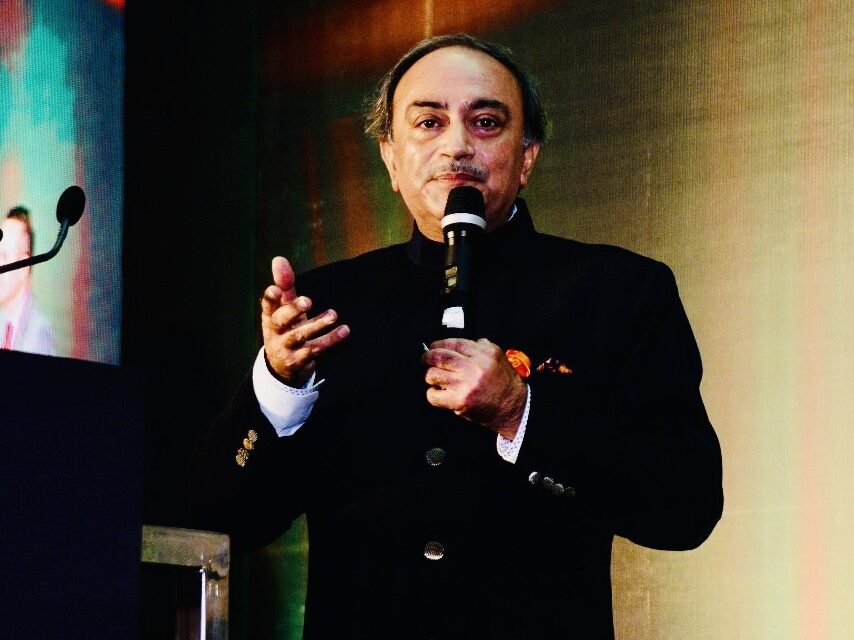
“What inspired you to pursue a career in hospitality?” Anand often smiles when asked this question, because the truth is disarmingly simple, “Frankly, very much by default than by design.”
In 1979, fresh out of St. Stephen’s College in Delhi with a degree in History, he was awaiting his results when an unexpected opportunity appeared. His neighbour, then Director of the US Library of Congress, offered him a cataloguer’s role, an enviable prospect at a princely stipend of ₹500 per day, with the promise of a permanent contract and even the possibility of a green card with the US government.
It was a different era. For many, such an offer would have been a dream pathway abroad. But destiny had other plans. His mother, a single parent and an educator with deep conviction, tapped into her network to arrange an interview with ITC. Her intention was simple, to keep her son rooted in India. That decision, born out of maternal foresight, changed the trajectory of Anand’s life and, in many ways, the course of Indian hospitality.
Finding Purpose in People
Anand’s entry into ITC was not the culmination of a long-held plan; it was the beginning of discovering a deeper calling. Hospitality became less about hotels and more about human connection. He saw service as a way to honour culture, elevate everyday gestures, and create meaning in moments that others might overlook. His belief was clear, hospitality thrives where empathy leads.
Leadership Woven with Grace
Over the decades, Anand grew into a leader who shaped spaces through dignity rather than authority. Colleagues often recall that he never “managed” people, he inspired them. His quiet presence, coupled with an intuitive understanding of human aspirations, set him apart as a master of influence rather than instruction. Under his guidance, excellence did not feel imposed, it felt natural, almost inevitable.
A Legacy Rooted in Values
Looking back, it becomes evident that Anand’s story is more than a career timeline. It is a legacy rooted in values, his mother’s resilience, his own openness to chance, and his unwavering focus on people. As the service industry in 2025 pushes forward with new definitions of luxury, sustainability, and personalization, his journey reminds us that the heart of hospitality lies not in grandeur but in grace.
Pivotal Roles in Hospitality’s Hub
Among the many chapters of Diwan Gautam Anand’s journey, two leadership roles shine as defining milestones: his tenure as Vice President and General Manager at ITC Maurya, Delhi, and earlier, his stewardship as Managing Director and General Manager at ITC Kakatiya, Hyderabad. These assignments were more than professional achievements; they were proving grounds where he refined his philosophy of leadership. At both properties, Anand led teams through scale, diversity, and complexity, yet always placed human connection at the center. The grandeur of the institutions was matched by his ability to make every associate feel part of a larger purpose, and every guest feel truly at home.
The Creative Joy of Building and Nurturing
For Anand, the essence of leadership extends far beyond managing operations. He describes the later stages of his career as deeply rewarding, thanks to the creative process of building brands, shaping systems, developing products, and nurturing people. He saw leadership as an act of creation, where developing talent was as important as designing processes, and customer delight was inseparable from profit growth. This philosophy ensured that his leadership style left an enduring imprint, not just on the hotels he ran, but on the individuals he mentored and the cultures he cultivated.
Crafting Experiences Through Innovation
One of Anand’s fondest professional memories reveals his blend of imagination and discipline: applying the DMADV methodology, Define, Measure, Analyse, Design, Verify, to the creation of Fabelle chocolate boutiques. It was a project where culinary artistry met retail innovation.
Beyond chocolates, what he envisioned was an experience, an immersive journey for the customer, where design, flavor, and atmosphere converged. This endeavour captured the joy he found in experimentation and highlighted his rare ability to fuse structured frameworks with creative storytelling. For Anand, hospitality was always about more than service; it was about shaping worlds where people could pause, savour, and remember.
Reimagining Tradition with Dakshin
For Anand, Dakshin was born out of curiosity and a refusal to reduce South Indian cuisine to stereotypes. He envisioned a space that celebrated the depth, diversity, and elegance of the South, far beyond the “tiffin image” many carried.
Dakshin became a penta-cuisine tribute to the coastal states, weaving together traditions bound by the sea, the reverence for native produce, and the mastery of steaming and spices. It was not just about food, but about creating an appreciative audience for a culture often overshadowed by northern dominance. With Dakshin, Anand gave the nation, and the world, a refined introduction to the sacred abundance of southern kitchens.
Precision and Poise with Edo
The journey of Edo brought a different kind of challenge, one that demanded rigor, artistry, and a meticulous eye for detail. Collaborating with the Japanese Ambassador, renowned designers like Super Potato, and expert chefs, Anand built a restaurant that mastered hygiene, styling, and the integrity of world-class ingredients.
Edo introduced India’s first Fish Mongery, a nod to the thriving trawler business along the coastline, and became a haven for Japanese expatriates and discerning global diners alike. Adding the country’s first Izakaya, Anand transformed Edo into more than a restaurant; it was an immersive cultural bridge, where Japan’s culinary soul found a home in India.
Ottimo: The Italian Spirit, Indian Soul
With Ottimo, Anand tapped into India’s enduring romance with carbohydrates and European flavours, yet without tying the brand to international royalties. This decision reflected foresight, a strategy to de-risk ITC’s portfolio, while giving Indian diners an authentic yet homegrown European dining experience. Ottimo celebrated the ethos of “Make in India,” offering an Italian table that belonged as much to global travelers as it did to Indian families. It combined simplicity with sophistication, bringing warmth, authenticity, and inclusivity to fine dining.
What Made the ITC Royal Gardenia Launch Such a Success?
The launch of the ITC Royal Gardenia remains a shining example of Anand’s ability to blend vision with flawless execution. At the heart of its success was the creation of a distinctive pre-opening services team, a group that understood the delicate balance between cost, time, and quality. This team was built with a clear philosophy: every product, process, and person involved had to align with the larger goal of sustainable excellence.
From the very first year, the hotel operated with a disciplined business model, targeting zero cash loss and a neutral PBT, an achievement rare in the industry. By the second year, the Gardenia had already become a benchmark property, driven not just by its financial prudence but by the exceptional customer service and experiences that defined every guest interaction. The Gardenia’s story was proof that hospitality could achieve both commercial resilience and unforgettable moments for its patrons, an equilibrium that few leaders manage to sustain, but Anand consistently delivered.
A Global Conduit for India’s Culinary Wealth
The Cuisine India Foundation was created with a singular belief, that India’s cuisine, with its wealth, diversity, and complexity, deserves a platform of global stature. As a members-only collective, its purpose is to act as a conduit between India and the world: introducing India’s finest to international audiences while welcoming global influences into India. In an era shaped by technology, tourism, and the diaspora, the Foundation provides the necessary guidance and refinement to place India confidently on the world stage, making India at home with the world, and the world at home in India.
Hindavi – The Kitchens of Indian History
Extending its vision into storytelling, the Foundation created Hindavi: The Kitchens of Indian History (www.kitchensofindianhistory.com). This blog explores how food has shaped India’s past, from royal courts and household intrigues to modern kitchens, through recipes, legends, and reimagined narratives. It highlights farmaishi (bespoke, secret) cuisines that risked extinction, while also honouring the resilience of India’s street food traditions.
Challenging misconceptions and celebrating India as a true fountainhead of tastes and influences, Hindavi brings history alive through flavours. Each narrative animates the past, turning recipes into stories of memory and legacy. What began as a blog has now grown into a larger initiative: the collation of a book of heirloom cuisines, designed to preserve the treasures of India’s palate and pass them forward to future generations. This effort ensures that the artistry of kitchens, once hidden or forgotten, continues to inspire, nourish, and remind us of the cultural wealth embedded in every dish.
The Complexities of Hotel Pre-Opening
Launching a new hotel is among the most demanding challenges in hospitality. It requires vision as well as the ability to align countless moving parts before a single guest arrives. Anand emphasizes that only companies with a growth mindset and long-term vision can dedicate the resources to build strong pre-operative teams. These teams dive deep into every aspect, product development, process alignment, people strategy, business planning, sustainability, room and space management, ensuring the foundation of the property is both resilient and future-ready.
From Challenge to Success Story
The impact of this structured approach is evident in landmark projects such as ITC Gardenia, ITC Grand Chola, ITC Grand Bharat, and Welcomhotel Jodhpur. Each property reflects how a well-prepared pre-opening strategy transforms complexity into opportunity. Embedding excellence at the very start allowed Anand and his teams to create hotels that achieved operational goals while delivering memorable experiences, proving that the true success of a launch lies in preparation, precision, and purpose.
Cornell’s Influence on Leadership
Reflecting on his time at Cornell, Anand often speaks of the joy he found in its analytical, case study–driven approach. The exposure to problem-solving through real scenarios and the emphasis on lateral planning left a lasting imprint on his leadership style. For him, education at Cornell was not just about acquiring knowledge; it was about learning how to anticipate the future, shape it with clarity, and align it to the growth of both business and people. This forward-thinking mindset became central to his philosophy, ensuring that leadership is as much about vision as it is about enabling teams to thrive in that vision.
Living the Spirit of Service
For young professionals in hospitality, Anand’s first advice is to embrace the essence of service itself. He believes that service is the most valuable thing on earth, and true joy in this industry comes when one learns to enjoy it. Performance and ethics go hand in hand, being honest to one’s job and to the profession is non-negotiable. Hospitality thrives where empathy and integrity lead the way. Treat every guest, colleague, and situation as an opportunity to bring dignity, grace, and care into action. When service is honoured, the profession becomes not just a career but a calling.
Kindness, Sustainability, and the Triple Bottom Line
Anand emphasizes that hospitality does not exist in isolation, it is deeply tied to the world around us. He urges young professionals to be kind to the earth, be kind to fellow human beings, and equally kind to themselves. The path forward lies in embracing the triple bottom line: People, Planet, and Profit. Success in hospitality must be measured not just in financial growth but also in how it uplifts communities and protects the environment. When kindness and sustainability become cornerstones, hospitality transforms into a force for collective good.
Time, Vision, and the Mindset
For Anand, the most profound advice rests in how one views time and ambition. He encourages professionals to respect the gift of time, drawing from ancient wisdom that describes time as a circle rather than a line.
“What goes around comes around, the axe forgets, but the tree remembers.” This philosophy, rooted in karma, reminds leaders that every action has resonance. Alongside this humility, he urges professionals to cultivate a moonshot idea, a bold, audacious vision that makes life more meaningful and keeps curiosity alive. With this balance of reverence for time and courage to dream, hospitality leaders can build futures that inspire generations.